
Photo by Thursday Review
Target Tops
2,000 Stores
in United States
| published June 27, 2026 |
By Thursday Review staff
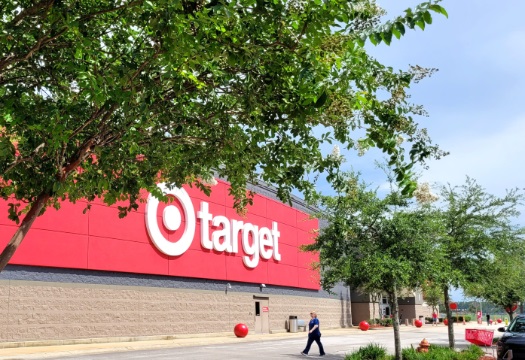
As of the start of summer, Target operates more than 2,000 stores in the U.S. In March it opened that milestone 2K location in North Carolina, and has since opened dozens of new stores, including retail locations in Dallas, Texas, Bakersfield, California, West Orange, New Jersey, and Springfield, Missouri.
The frequent grand openings are part of what the retail giant hopes will be a very busy era of new locations, some 300 the company says it plans to open over the next ten years, with at least half of those having grand openings by the end of 2030. The goal, according to the company’s marketers, is to have at least one target retail store within ten miles of most American homes (though this is both subjective and tricky to verify). Company officials have stated that one of the chief customer concerns is that the nearest Target store is too far from their home.
Three U.S. states will gain most directly from Target’s plans to build more stores: Florida, Texas, and North Carolina. Target’s objectives in Florida are directly linked to the Sunshine State’s robust population growth; Florida is now the third most populous state, with a population that has increased by nearly a quarter a million this year alone. Other major retailers are on a building campaign in Florida to keep pace with the population growth.
The Minneapolis-based Target has also said it plans to remodel/expand some 130 stores to meet newer standards for design, customer appeal, and expanded inventory. Many stores may be subject to renovations to make the store more “navigable” for customers.
If online retailers (such as Amazon) are included, Target is the eighth largest retail chain in the United States based on total sales, according to the National Retail Federation. Walmart, based in Bentonville, Arkansas, is the largest retailer by a wide margin, with about $565 billion in sales in 2024. Amazon is second, with $275 billion. Costco, Kroger, Home Depot, and CVS all come in in close order on the list. In 2024, Target’s total sales were about $106 billion.
According to the Target company website, the retailer plans to open 11 new stores in July. This will include new retail locations in: Mesa, Arizona; Perris, California; Orlando, Florida; Frankfort, Kentucky; and Seneca, South Carolina. A press release on the company website describes this year’s expansions a “$5 billion capital investment plan.”
Target was founded in 1962 and was then owned by Dayton-Hudson Corporation (earlier in the centiry it was called Dayton Dry Goods, Inc), a mid-sized conglomerate which owned and managed other retail operations, shopping centers and malls. The first Target store opened in Roseville, Minnesota. One of Target's notable steps forward in innovation was that it became the first major retailer to introduce Universal Product Code scanning within its stores, a significant move since this enabled the retailer more more closely manage and monitor inventory.
The parent company Dayton-Hudson changed its name to Target in 2000, at which time it sold off all remaining subsidiaries (including as Marshall Fields, Mervyn's) and began its exclusive focus on Target stores only.
Target's growth has been steady and generally successful, though there have been setbacks. It's ambitious foray into Canada, which included a buyout of the leases and properties of chain store Zellers (sometimes called in those days the Canadian Kmart), ended badly for Target, and it was eventually forced to sell-off its Canadian holdings. Then, in the fourth quarter of 2013, Target was the victim of a massive pre-holiday data breach, at that one of the worst ever experienced by a major retailer, and one which greatly suppressed sales across the U.S. and triggered costly reimbursements to customers. Then CEO Gregg Steinhafel resigned the next year in the wake of the data breach and the huge sales slump.
On the whole, after 2015, Target saw its fortunes rebound, and it has steadily grown in spite of the challenges presented by the Covid19 pandemic and complex labor and wage issues.
Related Thursday Review articles:
Aldi's Ambitious Expansions; R. Alan Clanton; Thursday Review; February 13, 2026.
Did the Sunshine State Kill Lucky's Market?; By R. Alan Clanton, Thursday Review editor; May 3, 2026.